Tin roofs are one of the most popular surfaces for commercial and industrial solar projects — and for good reason. A tin roof solar mounting system lets you fix photovoltaic modules onto corrugated, trapezoidal or standing seam metal roofing without weakening the structure, and in many cases without drilling a single hole. This guide explains what a tin roof solar mounting system is, how it is installed step by step, which advantages it delivers, and how to choose the right metal roof solar mounting system for your project.
What Is a Tin Roof Solar Mounting System?
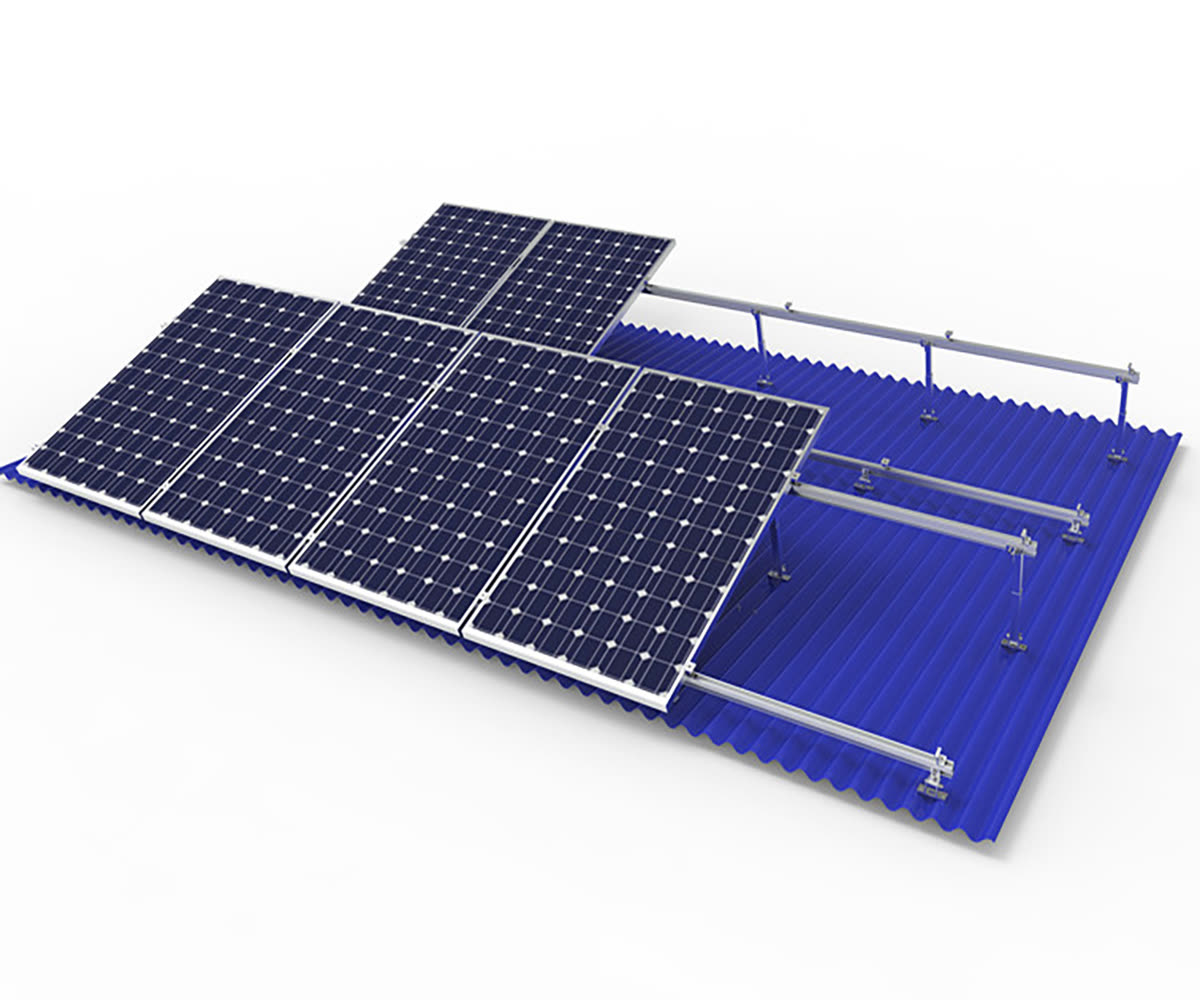
A tin roof solar mounting system — also called a metal roof solar racking system or PV mounting structure — is the complete set of structural hardware that connects solar panels to a tin or metal roof. A standard kit contains aluminum mounting rails, L-feet brackets, mini rails, standing seam clamps, mid clamps and end clamps, together with bolts, EPDM sealing washers and grounding clips. The system transfers wind and snow loads from the modules into the roof purlins while keeping the roof completely watertight.
Why Tin and Metal Roofs Are Ideal for Solar
- Large, uninterrupted surface area – a single warehouse roof can host hundreds of kilowatts of PV modules.
- Strong, light sheeting – steel and aluminum roofing allows long rails to span between purlins with fewer attachment points.
- Natural ventilation – the raised ribs of corrugated and trapezoidal sheets create airflow beneath the panels, lowering module temperature and improving energy yield.
- Reflective surface – bright metal roofing adds a bifacial gain on reflective roofs.
- Non-penetrating options – standing seam clamps keep the roof membrane and its warranty untouched.
Key Components of a Tin Roof Solar Mounting System
- Mounting rails – anodized aluminum 6005-T5 rails in 2.4 m to 6 m lengths, sized by wind and snow load.
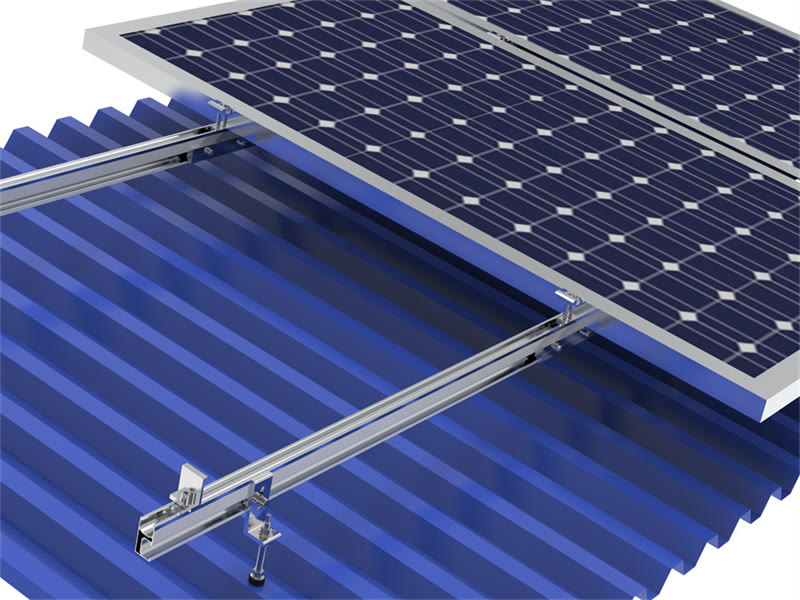
- L-feet brackets – the classic solution for corrugated and trapezoidal tin roofs; a compact angle bracket fixed to the crest of the sheet.
- Mini rails and mini rail brackets – short rails clamped directly onto the sheet ribs, ideal for short spans and fast installation.
- Standing seam clamps – non-penetrating clamps that grip the seam of a standing seam roof with no drilling at all.
- Mid clamps and end clamps – hold the module frame at the specified torque and keep the array perfectly aligned.
- Roof hooks and flashing – for penetrating installations on tile-look or insulated metal panels.
- EPDM gaskets, butyl sealant and grounding clips – seal every fastener and bond the array electrically.
Types of Tin Roof Solar Mounting Systems
1. Corrugated tin roof – L-feet plus rail
The most common and most economical configuration. L-feet are screwed into the crests of the corrugation, sealed with EPDM washers, and the aluminum rail is bolted on top.
2. Trapezoidal metal roof – mini rail system
Trapezoidal sheets have wide, flat ribs, so a trapezoidal metal roof solar mounting kit with short mini rails and two fasteners per rib gives an extremely strong, low-profile and fast-to-install base.
3. Standing seam metal roof – non-penetrating clamps
Where the roof warranty forbids penetrations, standing seam solar roof clamps grip the folded seam, so the roof membrane is never pierced.
4. Ballasted and rail-free systems
For flat or very low-slope metal roofs, ballasted or rail-free mounts reduce hardware and labour to a minimum.
How to Install Solar Panels on a Tin Roof: Step by Step
- Survey the roof. Check the sheet profile, sheet thickness, purlin spacing, roof age and the design wind and snow loads.
- Plan the layout. Fix row spacing, module orientation, walkways and edge zones, then mark every attachment point on the ribs.
- Prepare the fixing points. Pre-drill on the crest of the rib and always land on a purlin, never on the free span of the sheet.
- Seal and fix the brackets. Fit EPDM washers or butyl sealant under every L-foot or mini rail base.
- Mount and level the rails. Bolt the aluminum rails to the brackets and check alignment and height.
- Clamp the modules. Use mid clamps and end clamps at the torque specified by the module maker.
- Ground and bond. Install grounding clips or a bonding conductor across the array.
- Commission. Finish with insulation resistance, continuity and IV-curve testing.
Main Advantages of Our Tin Roof Solar Mounting System
- 25-year design life. Anodized aluminum 6005-T5 rails and stainless steel fasteners that never rust.
- Non-penetrating options that protect the roof waterproofing and its warranty.
- Engineered load capacity – wind load tested for high-speed and coastal sites, snow load calculated per project.
- Fast installation. Pre-assembled, modular parts cut roof labour time dramatically.
- Corrosion resistance for coastal, chemical and heavy-industry environments.
- Universal compatibility with all standard framed modules, including large-format 182 mm and 210 mm panels.
- Complete kit in one order – rails, brackets, clamps, bolts, grounding and EPDM sealing.
- Engineering support – layout drawings, load calculations and installation manuals for every project.
Choosing the Right Tin Roof Solar Mounting System: A Buyer's Checklist
- Roof type and sheet profile: corrugated, trapezoidal or standing seam, rib height and sheet thickness.
- Purlin spacing, purlin material and the real fixing positions available.
- Design wind speed, snow load and seismic zone from the local code.
- Distance to the coast or to chemical plants, to select the right surface treatment.
- Whether the roof warranty allows penetration at all.
- Certifications, test reports, warranty terms, lead time and engineering support.
Where Tin Roof Solar Mounting Systems Are Used
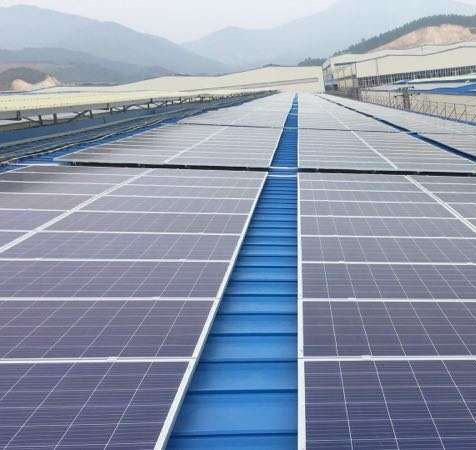
Tin roof solar mounting systems are specified every day for industrial warehouses, logistics parks, manufacturing plants, cold storage facilities, agricultural sheds, car parks and residential tin roofs — anywhere a large, strong and light metal roof needs to become a power plant.
Frequently Asked Questions
Can you install solar panels on a tin roof without drilling?
Yes. Standing seam tin roofs can be fitted with non-penetrating clamps that grip the seam, and some trapezoidal profiles accept clamp-on mini rails — no hole is made in the roof sheet.
How much does a tin roof solar mounting system cost?
Cost depends on the roof profile, the module layout, the design wind and snow load and the rail specification. A complete kit is quoted per kilowatt or per module, so send us your roof drawing for an exact price.
Will a solar mounting system void my roof warranty?
Not if it is specified correctly. Non-penetrating clamps and properly flashed, EPDM-sealed fixings are accepted by most roofing manufacturers.
How long does a tin roof solar installation take?
A trained crew normally installs 100 to 200 modules per day with a pre-assembled rail and clamp kit.
Get a Tin Roof Solar Mounting System Quote
Whether you are a rooftop EPC contractor, a distributor or a facility owner, we can supply a complete tin roof solar mounting system engineered for your roof profile, wind and snow loads. Send us your roof type, module size and project location, and our engineers will return a full layout and quotation. Visit 9sunsolar.com to see the full range of metal roof solar mounting systems and PV mounting structures.



 Red IPv6 compatible